Staying Hydrated at Work: Habits for Sharper Focus

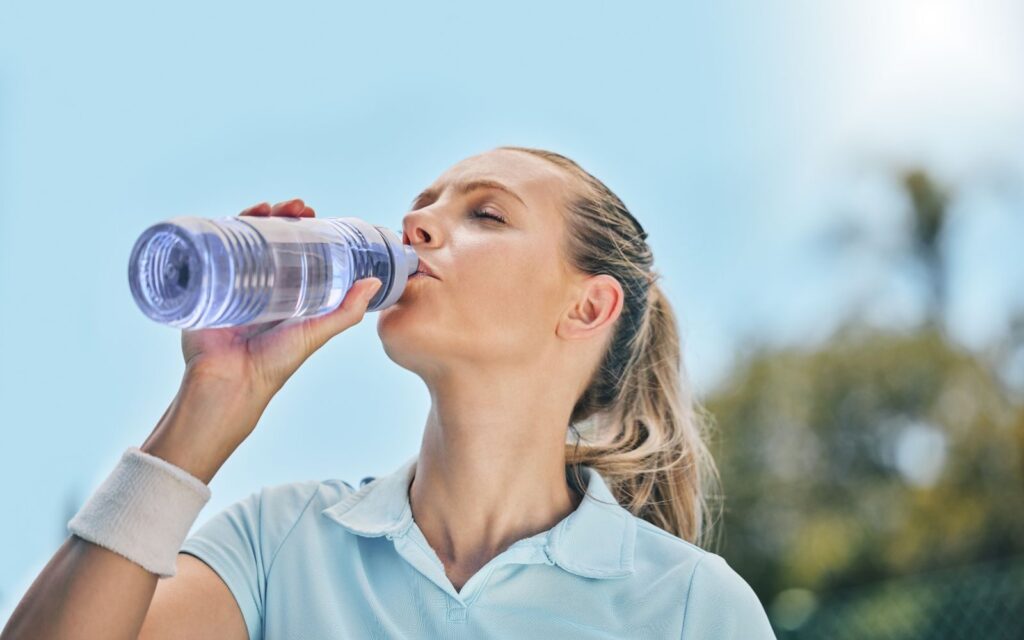
Staying hydrated at work is one of the simplest, cheapest wellness habits I have, and it quietly shapes how sharp I feel by mid-afternoon. If you want the short answer: keep water within arm’s reach, sip on a schedule rather than waiting for thirst, and use a refillable bottle you actually like.
Research links even mild dehydration to slower thinking and a worse mood, so the payoff for a small habit is real. In a study published in the British Journal of Nutrition, fluid loss of just over 1% of body weight was enough to dent concentration and lift feelings of fatigue.
I used to treat water as an afterthought. Then I started paying attention to the slump that hit around 3 p.m., and hydration turned out to be a bigger lever than another coffee. Below is exactly how I stay hydrated through a full workday without turning it into a chore, plus why it doubles as a small win for the planet.
Key Takeaways
- Staying hydrated at work supports focus: cognitive dips show up at roughly 2% body-water loss, according to peer-reviewed research.
- Sip on a schedule instead of waiting for thirst, which is a late signal.
- The Institute of Medicine sets adequate total water intake at about 125 oz/day for men and 91 oz/day for women, from drinks and food combined.
- A refillable bottle cuts single-use plastic waste, and PET bottle recycling in the U.S. sits around only 23%.
- Pair water with meals, movement, and breaks so the habit sticks.
Why Staying Hydrated at Work Matters for Focus
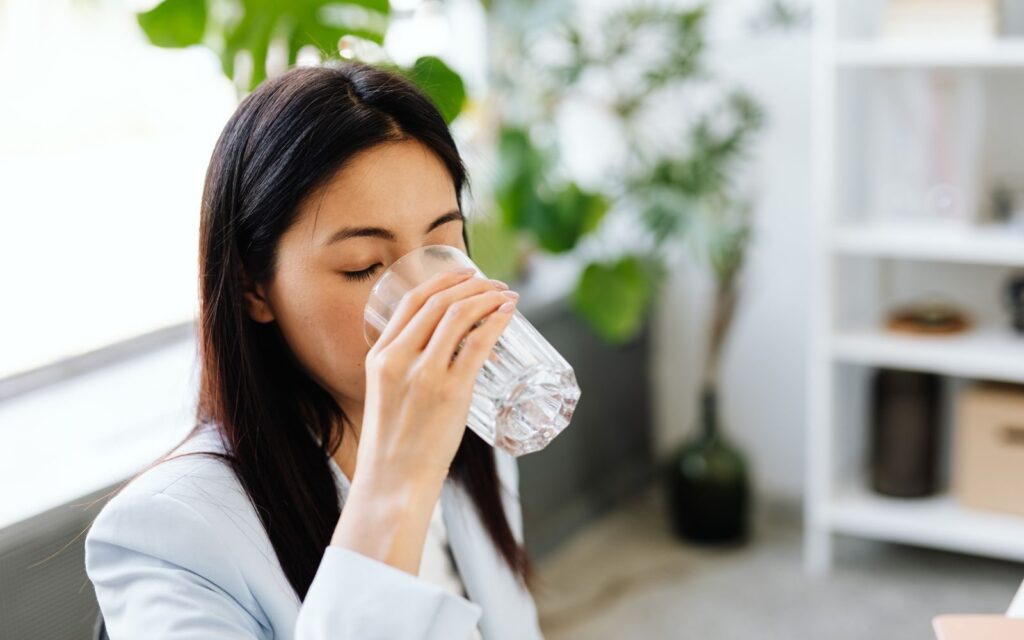
The clearest reason I care about staying hydrated at work is cognitive: my brain simply runs better with steady fluids. A review hosted by the National Institutes of Health found that dehydration is associated with declines in attention, short-term memory, and reaction time, especially during longer tasks.
These effects are not subtle once you look for them. University of Connecticut researchers reported that mild dehydration around 1.36% of body mass produced more headaches, lower concentration, and a heavier sense of task difficulty, particularly in women. That is a small deficit with an outsized cost during a packed morning of meetings.
Mood matters too. When I let hydration slip, I get irritable before I get thirsty, which is a bad combination for teamwork. Steady water is a low-effort way to protect both my thinking and my temperament, and it pairs well with the energy strategies I outline in my guide to nutrition and diet for sustained energy.
How Much Water Do You Actually Need?
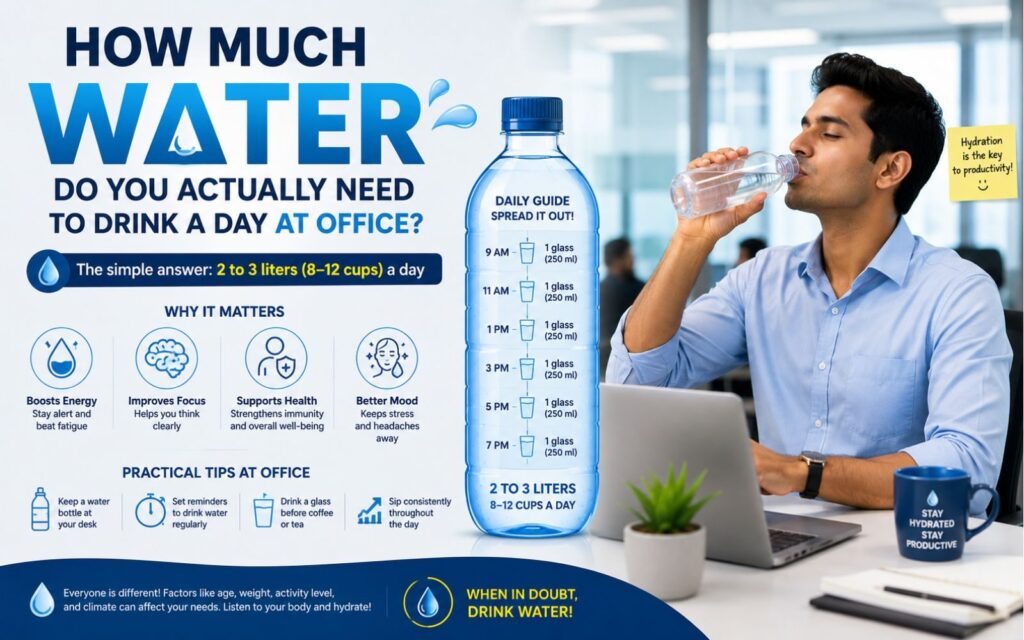
There is no single magic number, and I stopped chasing the old “eight glasses” rule. The Institute of Medicine’s guidance, referenced widely by health agencies, sets adequate total water intake at about 3.7 liters (125 ounces) a day for men and 2.7 liters (91 ounces) for women, including the water in food.
Most of us fall short of the beverage portion. According to the Centers for Disease Control and Prevention, U.S. adults averaged roughly 44 ounces of plain water per day in recent survey years, which leaves plenty of room to close the gap with a few deliberate refills at your desk.
Your real target shifts with heat, exercise, caffeine, and body size, so I treat those numbers as a floor, not a finish line. The practical test I use: pale-yellow urine and no lingering afternoon headache usually mean I am in a good range.
My Simple Desk Hydration System
Keep water visible and within reach
Out of sight really is out of mind. I keep a filled bottle on my desk at all times, because the moment I have to walk to a kitchen, my sip rate drops. Visibility is the cheapest behavioral nudge I know.
Sip on a schedule, not on thirst
Thirst lags behind actual need, so I anchor drinking to things I already do: a few sips at the top of every hour, a full glass before each meeting, and a refill after lunch. This rhythm keeps intake steady instead of cramming water in at 5 p.m.
Stack hydration with movement and breaks
Refilling my bottle is a built-in reason to stand up, which supports circulation and posture. I combine it with the short “movement snacks” I describe in movement snacks at work, so one habit reinforces another. A walk to the tap plus a stretch beats another slumped hour at the keyboard.
Flavor it if plain water bores you
If plain water feels dull, I add cucumber, lemon, or a splash of unsweetened tea. The goal is consistency, not purity. Making the drink pleasant is what keeps the habit alive on busy days.
The Sustainability Angle: Skip the Single-Use Bottles
Staying hydrated at work does not have to mean a graveyard of plastic bottles under your desk. Reaching for a refillable bottle and tap or filtered water is the greener default, and the numbers make the case.
Plastic recycling is far leakier than most people assume. The Environmental Protection Agency estimates the recycling rate for PET bottles and jars at just 23.2%, meaning the large majority of single-use bottles end up landfilled or incinerated. Americans go through tens of billions of single-serve water bottles every year, so an office switch to refillables adds up quickly across a team.
There is a personal upside too: a good insulated bottle keeps water cold, which makes me drink more, and it saves money over buying packaged water. Wellness and sustainability rarely align this neatly, and this is one habit where doing right by yourself and the planet point the same direction.
Watch the Hidden Dehydrators
Coffee is my morning ritual, and I am not giving it up, but I treat each cup as a cue to have water alongside it. Caffeine has a mild diuretic effect, and dry, air-conditioned offices pull moisture from the air and from you.
Long screen sessions also make me forget to drink, which is why I fold water into my regular pauses. My routine for those pauses lives in mindful work breaks for better mental health, and adding a few sips to each break costs nothing while keeping my energy level.
Summary
Staying hydrated at work is a small habit with real returns for focus, mood, and even your environmental footprint. Peer-reviewed research ties mild dehydration to slower thinking, while agencies like the CDC show most adults have room to drink more.
Keep water visible, sip on a schedule, stack the habit with movement and breaks, and choose a refillable bottle over single-use plastic. Done consistently, it is one of the highest-return, lowest-effort wellness moves I make in a workday.
Frequently Asked Questions
How much water should I drink during a workday?
There is no universal number, but the Institute of Medicine’s adequate total intake is about 125 ounces daily for men and 91 ounces for women, counting food and all beverages.
Since the CDC reports adults average only around 44 ounces of plain water, aiming for steady sips through the day is a reasonable goal. Adjust upward for heat, exercise, or caffeine, and use pale-yellow urine as a quick check.
Does mild dehydration really affect focus?
Yes. Research in the British Journal of Nutrition and reviews hosted by the National Institutes of Health link fluid losses of just 1 to 2% of body weight to reduced concentration, slower reaction times, and worse mood.
In a workplace, that can mean more errors and a harder time staying on task, which is why steady hydration is worth the small effort.
Is coffee or tea hydrating or dehydrating?
For most people, moderate coffee and tea contribute to daily fluids despite a mild diuretic effect, so they are not the villains they are made out to be.
I still pair each coffee with water, because caffeine plus a dry office can nudge me toward a deficit. Balance is the point rather than cutting caffeine entirely.
How does a refillable bottle help the environment?
Single-use plastic bottles have a low recycling rate, estimated by the EPA at about 23% for PET, so most are landfilled or incinerated.
Using one refillable bottle with tap or filtered water eliminates a stream of daily plastic waste. Across an office or a year, that switch prevents a meaningful amount of packaging from being produced and discarded.
What is the easiest way to remember to drink water at work?
Anchor it to existing routines: sip at the top of each hour, drink a glass before every meeting, and refill after lunch.
Keeping a filled bottle visible on your desk is the single most effective nudge, because thirst is a late signal. Stacking water with breaks and short walks makes the habit almost automatic.





One Comment