Healthy Snacks at Work: Smarter, Lower-Waste Choices

Healthy snacks at work are the ones you decide on before the 3 p.m. slump, not during it. In my experience, the best approach is a small, planned stash of whole foods in reusable containers, so the vending machine never makes the decision for you and less food ends up in the bin.
Key Takeaways
- Healthy snacks at work work best when chosen in advance: a short weekly plan beats willpower at 3 p.m.
- Pair fruit or vegetables with a protein or fibre-rich food so a snack feels like a small meal, not a sugar spike.
- Reusable containers and buying only what you will eat cut both packaging and wasted food.
- Most adults fall short on produce, so a snack is an easy place to close the gap.
Why Healthy Snacks at Work Matter More Than You Think
A snack is not a failure of discipline. For many of us, the gap between a morning meal and a late lunch is long, and a planned bite can bridge it. The trouble starts when the only convenient option is whatever sits in the office candy bowl.
There is also a real gap to close. According to a CDC report on 2019 survey data, only 12.3% of US adults met the fruit intake recommendation and just 10.0% met the vegetable recommendation. The same report notes adults should aim for 1.5 to 2 cup-equivalents of fruit and 2 to 3 cup-equivalents of vegetables daily.
Snack time is one of the easiest places to nudge those numbers up. I am not suggesting that a carrot stick fixes anything on its own, only that small, repeatable choices add up. If you have health concerns or dietary needs, a doctor or registered dietitian is the right person to ask.
How Do I Choose Healthy Snacks at Work?
I use a simple rule: every snack should include something from a plant and something that keeps me full. That might be an apple with nut butter, carrots with hummus, or plain yoghurt with berries.
Build a snack from two parts
Pairing produce with protein or fibre tends to feel more satisfying than a single sweet item. It also makes a snack less likely to turn into a second lunch.
Keep it simple and unprocessed
Whole foods need little or no packaging, which is where the sustainability angle comes in. A banana arrives in its own compostable wrapper; a single-serve snack bar arrives in plastic.
Watch the caffeine and sugar loop
Reaching for a sugary snack and a third coffee is a common afternoon pattern. If that sounds familiar, my post on caffeine at work covers how to time it more thoughtfully.
Plan Your Week in Ten Minutes
Planning is what makes healthy snacks at work realistic. On Sunday, I write down three snacks for the week and add only those items to my shopping list.
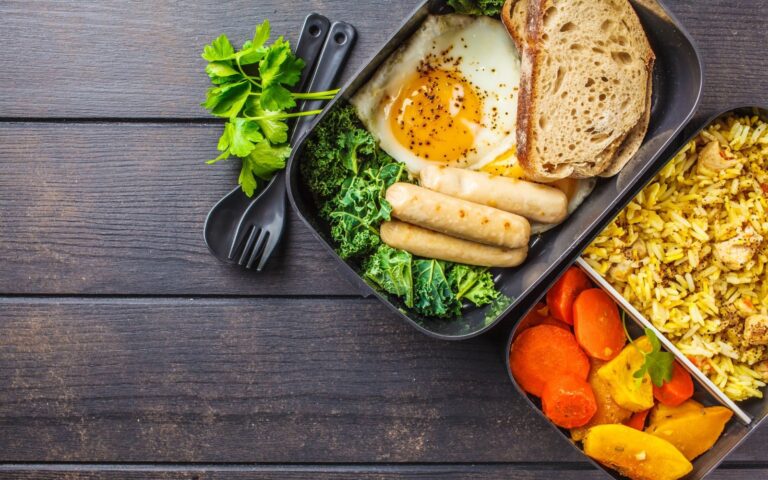
If you already batch-cook lunches, snacks fit naturally into the same routine. My guide to meal prep for work shows how to fold them in without extra effort.
- Desk drawer (shelf-stable): unsalted nuts, seeds, whole-grain crackers, dried fruit in small amounts.
- Office fridge (fresh): yoghurt, hummus, cut vegetables, cheese, whole fruit.
- Carry-in (day of): an apple, a banana, or a small container of berries.
Cut Food Waste While You Snack
Snacks are easy to over-buy, and the office fridge is where good intentions go to wilt. The US EPA states that one-third of all food in the United States goes uneaten, and that about 96 percent of households’ wasted food ended up in landfills, based on its 2019 Wasted Food Report. That is a good reason to buy less and use it all.
The EPA’s practical advice maps neatly onto the office. Its tips for preventing wasted food include checking what you already have before shopping, planning meals, storing produce correctly, and freezing what you will not eat in time.
Small habits that help
- Label anything you leave in the shared fridge with the date.
- Buy loose fruit and vegetables rather than pre-cut packs.
- Use a reusable container instead of single-use bags.
- Take leftovers home on Friday rather than leaving them over the weekend.
Snack Mindfully, Away From Your Screen
I used to eat at my keyboard without noticing a single bite. Stepping away, even for five minutes, makes the snack more enjoyable and gives your eyes and back a break too.
If you tend to graze all day, my article on eating at your desk goes deeper on why a change of scene helps. And do not forget water; thirst is easy to mistake for hunger, which is why I keep a bottle beside my snack drawer, as I explain in staying hydrated at work.
Common Mistakes With Healthy Snacks at Work
The first is treating “healthy” labels as a guarantee. Packaged foods marketed as wholesome can still be high in added sugar, so read the ingredient list. The second is stocking too much. A drawer full of snacks invites mindless eating and, for fresh items, waste.
The third is skipping real meals and snacking instead. Snacks should support your meals, not replace them. If your day regularly leaves no time to eat properly, that is a workload problem worth raising, not a snack problem.
Summary
Healthy snacks at work come down to planning, pairing, and portions. Choose whole foods, combine produce with something filling, store them in reusable containers, and buy only what you will eat. You will likely feel steadier through the afternoon, and you will throw less away. Start with just one planned snack this week and build from there.
Frequently Asked Questions
What are good healthy snacks at work that do not need a fridge?
Whole fruit, unsalted nuts, seeds, whole-grain crackers, and small amounts of dried fruit all keep well at room temperature. Store them in a sealed container in your desk drawer.
How many snacks should I eat during the workday?
There is no single right answer. Some people are comfortable with none, others with one or two planned snacks. Pay attention to your own hunger, and ask a registered dietitian if you want personalised guidance.
How can I make my office snacks more sustainable?
Choose foods with little packaging, use reusable containers, buy in amounts you will finish, and compost scraps where possible. These steps reduce both waste and cost.
Are fruit and vegetables really that hard to fit in?
CDC survey data suggests many adults find it so, with only about one in eight meeting the fruit recommendation and one in ten meeting the vegetable recommendation. Snack time is a simple opportunity to add some.